Monday, July 2, 2018

Difference Between a Divorce and Annulment

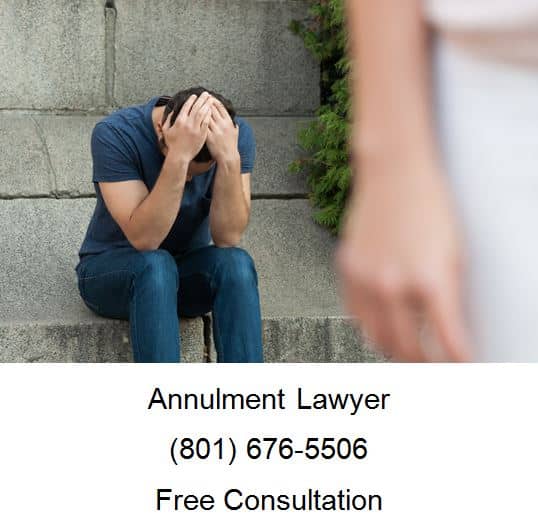
Divorce is often used as a generic term for ending a marriage. However, not every marriage that comes to an end is the result of a divorce. Rather than opt for legal separation, countless people throughout Utah have chosen to end their marriage with an annulment. But what is the difference between a divorce and annulment? Because there are many myths about annulments, it is important to discuss them with a divorce lawyer. Let’s take a closer look at some of these differences.
Difference Between a Divorce and Annulment

SEPARATING FACT FROM FICTION

Divorce is the process of terminating and dissolving a legally valid marriage. An annulment erases a marriage by declaring it null and void. Although the marriage is erased, the official records of the marriage are still kept on file. It is also important to understand that religious annulment are not recognized as a legal dissolution of a civil marriage.

IS YOUR MARRIAGE A MISTAKE?

Life doesn’t always go according to plan. There are many people who get married against their will or even without their own knowledge. Annulments are often seen as a “do-over”. It gives people the ability to turn back the clock to when they were single and wipe out the marriage. To receive an annulment in Utah, the marriage must satisfy the following conditions.

  • Misrepresentation and fraud:This happens when one party is misled into marriage. In some cases, a spouse may have lied to their partner or withheld important information. For example, some people are tricked into marriage by another person who is already married. Misrepresentation can also include a person’s inability to produce children.
  • Concealment:Unfortunately, it happens to far too many people in Utah. Many people suddenly discover their spouse has a criminal record or children from another relationship or have a sexually transmitted disease. When this information is kept from one partner, it can be grounds for annulment.
  • Misunderstanding:Many people enter marriage to have children and raise a family. However, some enter marriage under false pretenses. To receive an annulment on these grounds, the level of misunderstanding must be substantial.
  • Incest and impotency:If one party is unable to consummate the marriage, it can be ground for annulment. Any sexual act involving a sibling, grandchildren, first cousins, aunts, and uncles are grounds for annulment.
  • Lack of consent:For any marriage to be legally valid, both parties must have the mental capacity to consent to marriage. If a person enters marriage due to threats or is forced into marriage by drug or alcohol impairment, it can be grounds for an annulment.

WHAT IF YOUR EX SPOUSE ABDUCTS YOUR CHILD?

Child custody is one of the most emotionally charged aspects of divorce. When one parent loses the rights to their children, it can be devastating. In some cases, it can also bring out the worst in people. Once a divorce settlement is finalized, both parties are required to honor to terms of conditions handed down by the court. While most people abide by the laws of Utah family courts, there are others who take the law into their own hands. The results can be disastrous. Among the most serious is child abduction.

WHEN CHILD CUSTODY TURNS INTO KIDNAPPING

We have all seen movies about children being kidnapped and taken for ransom by the bad guys. But what if the bad guy happens to be your former spouse and one of your child’s parents? It can make the situation even more complicated. Police generally do not get involved in family disputes. But when it comes to domestic violence and kidnapping, it is vital to get law enforcement involved as soon as possible. In today’s Digital Age, Amber alerts have become a valuable tool to recover missing and kidnapped children throughout the country. Once a child abduction has been reported and confirmed by police, Amber alerts are immediately transmitted to smartphones and digital devices with an extensive radius of where the abduction took place.

TURNING TO A PRIVATE INVESTIGATOR FOR ASSISTANCE

When a child is abducted, it is important to turn to as many legal resources as possible. Many parents in Utah have chosen to hire a private investigator. Although these services can be expensive, they can also be very effective. Unlike traditional law enforcement, Salt Lake City private investigators are able to devote more time to the needs of their clients.

THE BENEFITS OF RESTRAINING ORDERS

Many child abductions can be prevented by getting a restraining order. If you have an ex-spouse who is abusive, makes threats or is constantly stalking, obtaining a restraining order can be your best defense. With help from an experienced and knowledgeable Salt Lake City divorce attorney, obtaining a restraining order becomes much easier.

INTERNATIONAL CHILD CUSTODY DISPUTES

Perhaps the most complicated child custody matters are those that go beyond our borders. Unfortunately, once a parent abducts a child and flees to another country, the laws become more difficult to enforce. The best case scenarios involve fleeing parents that enter a country that has agreed to an international treaty with the United States. A prominent public official may be able to negotiate the safe return of your child. However, if a child is taken to a country without a treaty, it is the best contact an attorney that specializes in international disputes.

Free Consultation with a West Jordan Divorce Lawyer in Utah

If you have a question about divorce law or if you need to start or defend against a divorce or annulment case in Utah call Ascent Law at (801) 676-5506. We will help you.

Michael R. Anderson, JD

Ascent Law LLC
8833 S. Redwood Road, Suite C
West Jordan, Utah
84088 United States

Telephone: (801) 676-5506

Sunday, July 1, 2018

10 Ways to Reduce Estate Taxes

The Federal estate tax can be reduced through various legitimate estate planning techniques. Following is a list of ten methods you should think about as ways to reduce your estate taxes.

10 Ways to Reduce Estate Taxes

  1. MARITAL TRANSFERS. Except where a spouse is a noncitizen, neither lifetime gifts nor bequests at death to one’s spouse are subject to estate taxes. However, the estate of the spouse will have to pay estate taxes on the spouse’s entire taxable estate, including the amount transferred to the spouse pursuant to the lifetime transfer, at the spouse’s death. Utah probate law allows these transfers and they are completely legal. Accordingly, this tool merely defers estate taxes; it does not entirely eliminate them.
  2. LIFETIME GIFTS TO CHILDREN AND GRANDCHILDREN. Each person can make annual gifts of $12,000 to any number of persons, typically children or grandchildren, without incurring a gift tax. If a husband and wife both engage in gifting, they can collectively give away $24,000 per year per recipient without incurring a gift tax. Over a period of several years the amount of money that can be transferred to a couple’s intended beneficiaries under this method is substantial, thereby reducing the size of the taxable estate.
  3. UNIFORM TRANSFER TO MINORS. This is a form of gifting used where the children are still minors. The gift is given to a custodian for the benefit of the child, and is distributed to the child when he/she reaches the age of majority. As with other gifts, the annual exclusion for lifetime gifts is used under this approach.
  4. AB TRUSTS AND QTIP TRUSTS. For 2006 through 2008, each person is currently scheduled to have the first $2 million of his/her estate pass to his/her heirs without estate taxes. This is referred to as the “unified credit” or “personal exemption.” An AB Trust is a trust designed to make sure the unified credit of each spouse is used to the full extent possible, while allowing the surviving spouse to have the use of the assets of the deceased spouse during the remainder of the surviving spouse’s lifetime. A QTIP Trust permits a spouse to transfer assets to his/her trust while still maintaining control over the ultimate disposition of those assets at the spouse’s death. QTIP Trusts are particularly popular in situations where a person is married for a second time but has children from a first marriage for whom he/she would like to reserve assets.
  5. IRREVOCABLE LIFE INSURANCE TRUSTS. By transferring small amounts of the estate (equal to the amount of a life insurance premium) to an irrevocable life insurance trust, a person can reduce the size of his or her taxable estate while creating a much larger asset (the life insurance proceeds) outside of the estate. The life insurance proceeds are generally not taxable.
  6. FAMILY LIMITED PARTNERSHIP. The family limited partnership provides a valuable estate planning tool to assist families in transferring ownership of family-owned closely held businesses to the next generation, and in protecting family assets from creditors. It also permits taxation of partnership income at the children’s lower tax rates. Additional attractive features of the family limited partnership are flexibility and revocability.
  7. PRIVATE ANNUITY. A private annuity is a sale of an asset to a younger generation in exchange for an unsecured promise to pay annual amounts to the seller for the seller’s lifetime. The sold asset is thus removed from the seller’s estate, although the amounts of the payments to the seller (unless spent) will be part of the seller’s estate.
  8. QUALIFIED FAMILY-OWNED BUSINESS INTEREST (QFOBI). The Internal Revenue Code permits a “qualified family-owned business interest” to be deducted from a gross estate. To qualify for the deduction, the following requirements must be met:
    • The decedent or family members must have owned and participated in the business for at least five of the last eight years
    • The business interest must make up at least 50 percent of the decedent’s adjusted gross estate
    • The decedent and his/her family must have owned 50 percent of the business
    • The decedent must have been a U.S. citizen or resident
    • The business must be located in the U.S.
  9. SPECIAL USE REAL ESTATE VALUATION. For federal estate tax purposes, real estate is usually valued at its “highest and best use” value. This can sometimes produce unfair results, such as where a family farm is located adjacent to more valuable commercial real estate. To address this unfairness, the Internal Revenue Code permits certain real estate to be valued at its “actual use” rather than its “highest and best use.”
  10. CHARITABLE TRANSFERS. Lifetime charitable transfers or gifts to charities upon death can reduce the size of the estate and thereby reduce estate taxes. Lifetime gifts provide the added benefit of an income tax deduction. Gifts can also be made in a manner that lets the donor retain the right to use the gifted asset or income therefrom until death.

Free Consultation with a Utah Estate Lawyer

If you are here, you probably have an estate issue you need help with, call Ascent Law for your free estate law consultation (801) 676-5506. We want to help you.

Michael R. Anderson, JD

Ascent Law LLC
8833 S. Redwood Road, Suite C
West Jordan, Utah
84088 United States

Telephone: (801) 676-5506

Making a Trust

Maybe you’re thinking about how to better manage your property, or you want to make sure your family will be taken care of after you’re gone. If you’re having these thoughts, you might want to think about setting up a trust. A trust is basically a transfer of legal title from the owner (the grantor, trustor, or settlor) to an institution or person (a trustee). The trustee then administers the trust according to the trust terms for the benefit of a beneficiary. There are various factors to consider when setting up a trust. These factors include the size of the estate, the age, and marital status of the grantor.

Making a Trust

In this section you can find helpful tips and information on how to amend an existing trust, how to choose a trustee, and how a trust ends. You can also find articles giving guidance on how to put money and other assets – such as stocks and property – into a living trust, and instances in which setting up a trust may not be necessary.

What is a Trust?

A trust is an estate planning tool that can be used while you’re alive or for the benefit of your heirs. Each state has it’s own laws governing trusts but several states have adopted the Uniform Trust Code, making their laws very similar. There are several types of trusts. Living trusts, AB trusts, charitable trusts are all just a few types of trusts available to people. The type of trust you’ll want to set up will depend on what you would like to achieve with the trust.

Is a Living Trust Necessary?

Living trusts have many benefits but they also have some drawbacks. For example, a living trust involves routine maintenance and is harder to change than a will. In addition, it’s best to use an attorney when setting up a living trust, which can be expensive. These drawbacks can be outweighed by the benefits of a living trust depending on certain factors – such as age, marital status, and estate size.

A person who is under the age of 55 and healthy, probably doesn’t need a living trust because of it takes a decent amount of time and energy to maintain a trust. Marriage can also be a factor when deciding whether or not to set up a living trust. If married couples plan on leaving their property to each other, there are mechanisms in place for an easy transfer of assets after the death of one spouse. Finally, the size of the estate is also a factor in whether it’s a good idea to set up a living trust. Smaller estates generally don’t have a problem going through the probate process, making a living trust unnecessary.

Hiring a Lawyer

A trust can be fairly easy to set up, so a lawyer is not always necessary. However, a person with a large or complex estate or a unique situation may want to consult with an estate planning attorney for help with setting up a trust. Regardless of the size of estate, it might be a good idea to talk to an estate planning attorney if you have questions or concerns about setting up a trust.

Free Consultation with a Trust Lawyer in Utah

If you are here, you probably need a trust. If so, call Ascent Law for your free trust consultation (801) 676-5506. We want to help you.

Michael R. Anderson, JD

Ascent Law LLC
8833 S. Redwood Road, Suite C
West Jordan, Utah
84088 United States

Telephone: (801) 676-5506

Saturday, June 30, 2018

What Should I Do Before Filing for Divorce?

Entering marriage may be the most important decision a person will ever make. Not only are you making the commitment to spend the rest of your life with your partner, you are also opening yourself to sharing financial responsibilities, raising a family and owning property. Most sensible people take the time to weigh the pros and cons of whether to get married. However, not enough people weigh those same options when it comes to ending a marriage. By the time most people consider filing for divorce in Utah, they have already beaten down by stress and may not be in the proper frame of mind to ask themselves these important questions. It is often one of the biggest mistakes many people make. One of the best solutions is to first seek input from a mediator, a marriage counselor or a Salt Lake City divorce lawyer to properly evaluate whether divorce is the best option.

What Should I Do Before Filing for Divorce

VOICE YOUR CONCERNS

Communication is an important component in any successful relationship. But not every marriage is built to last. There will be times when even the strongest relationships will begin to go through rough patches. It is vital to maintain a good level of communication. Do not be afraid to voice your concerns to your partner. But simply voicing your concerns is not enough. Effective communication also involves listening to your spouse. Be cognizant of their feelings and problems. One common scenario is when one spouse feels underappreciated by the other. Take the time to listen to your partner and engage in constructive dialogue. If neither person is capable of having a civil conversation, it may be time to dissolve the marriage and file for divorce.

WHAT ARE YOUR EXPECTATIONS?

Nobody gets married with the goal of eventually getting divorced. Most couples go through a honeymoon period early in their marriage. During this time, life couldn’t be better. However, not everybody enters marriage with the same expectations. Some people have no clue how their partner expects them to behave. If your expectations are way beyond those of your partner, there are two options. You can either try to work out a compromise or may decide to go your separate ways.

CAN YOUR MARRIAGE BE SAVED?

When a marriage goes bad, it can seem overwhelming. Many people simply give up. But if you truly love your spouse, it may be worth trying to work things out. Take the time to write down a list of things you need to do to save the marriage. After the list is completed, write down what your spouse needs to do. Then ask your partner to make the same list.

IS YOUR LIFE BETTER WITHOUT YOUR PARTNER?

Marriages fall apart for different reasons. Some couples break up in less than one year. Others stay married for decades before finally calling quits. Regardless of how long you have been married, there is one fundamental question that needs to be asked. Would your life be better without your spouse? It’s not an easy question. No matter how many times you consult with a divorce attorney, only you can decide.

KEEPING YOUR COOL DURING DIVORCE

Every divorce has different circumstances, but the emotional toll of the process is something that will be felt by everyone. This can lead to tempers flaring, angry outbursts, feeling lost, depression or any number of strong feelings that may cloud your ability to keep a level head throughout the long and arduous litigation. It is very important that you don’t let raw emotion lead you into doing something rash that may hurt your side in court, and here are a few things to remember about keeping your composure at the toughest of times.

KEEP A POSITIVE OUTLOOK

A divorce is one the most stressful situations in a person’s life, and it can be very difficult to remain positive. Marriages require the mutual agreement of two people, but it only takes one to decide they want a divorce. This can be particularly hard if you were not the one to make this choice, and with all of the destructive stereotypes associated with divorce, it is easy to become bogged down in all of that negativity.

Maintaining an optimistic perspective may sound cliché, but it is key to getting through the process. It is important to remember that everyone has their faults and it is not singularly you or your spouse alone that caused the end of the marriage. Consider the divorce as a life lesson, not a synonym for failure, and know that it is possible to move forward with dignity and still find happiness.

Many feel like getting the divorce finalized as soon as possible, regardless of any long-term sacrifices they make in doing so, is the only way to move forward with their life. Focusing on the new and exciting aspects of getting a fresh start to life instead of dwelling on the past is one of the hardest, but most important steps in seeing things through a positive light.

THE SCAPEGOAT

During the divorce proceedings, it will often feel easier to roll over and agree with whatever terms the opposing party is putting forward instead of getting in a bitter argument over details that aren’t in your favor. This attitude can lead to blindly signing unfair terms, purely to avoid confrontation.
Most attorneys will have no problem being the “bad guy” particularly in the tougher aspects of the divorce, such as settlement negotiations. They are there to be an advocate for you and get the best arrangement possible, but they cannot do their job if you simply sign agreements to avoid hostility.

THERAPISTS FOR DIVORCE

Meeting regularly with a professional therapist can be a very beneficial way to help regain confidence and find a positive direction, despite the common societal view held by men that opening up about your emotions is an embarrassing sign of weakness.

While seeking a professional can be very beneficial for dealing with the stress and emotional toll of divorce, take into consideration that it can help or hurt your divorce proceedings depending on where you live. Therapists’ records are discoverable in some states, meaning they could be detrimental or embarrassing depending on what was discussed if they are brought up in court. Attorneys can also recommend seeking a professional counselor in situations where their client has been accused of emotional or psychological abuse to show the court they are working on the problem. Either way, it is probably best to ask your attorney’s advice before seeking out a therapist to ensure it doesn’t hurt your case.

Keeping cool during the divorce and maintaining an optimistic outlook is very important for getting through, and beyond, the proceedings. It may feel crushingly oppressive at times, but the world will continue to turn, there is still plenty to enjoy and much greater happiness to find. Keeping control of your emotions instead of giving in to reckless action will help you avoid unnecessary problems and have a better perspective after everything is over.

Free Consultation with Divorce Lawyer in Utah

If you have a question about divorce law or if you need to start or defend against a divorce case in Utah call Ascent Law at (801) 676-5506. We will fight for you.

Michael R. Anderson, JD

Ascent Law LLC
8833 S. Redwood Road, Suite C
West Jordan, Utah
84088 United States

Telephone: (801) 676-5506

What Happens if You Don’t Probate the Will?

When a person dies with a will, they typically name a person to serve as their executor. The executor is responsible for making sure that the deceased’s debts are paid and that any remaining money or property is distributed according to their wishes.

What Happens if You Don't Probate the Will

It’s not uncommon for wills to be written years before a person dies. Once death occurs, the executor should file the will in court to begin the probate process. But it’s not always that simple. Sometimes an executor dies first. Or an executor can decide they no longer want the job. So, what happens if you do not probate a will?

Utah Probate Law

In Utah, you have to probate a will within three (3) years of the person’s death.  You aren’t required to serve as the executor of a will, even if you made a promise to the deceased that you would. This doesn’t mean you can stick the deceased’s will in a drawer and forget about it. Most state require any person in possession of an original signed will to deposit it at the court of the county where the deceased resided. Filing deadlines vary by state, range from 30 days to 3 months.

Penalties to the Personal Representative

Failing to file a will within the time required by the state can have serious consequences. Although failure to file by itself is not a criminal violation, in most states this subjects the person to a lawsuit by someone who was financially hurt by the failure to file. For example, in Washington the law says that anyone who “willfully failed to file a will with the court” is liable to any injured party for the damages resulting from the violation.

Criminal liability could occur if the failure to file a will is coupled with an intent to conceal the existence of the will for financial gain. For example, your father decided to leave his entire estate to a favorite charity and left you nothing. You decide not to file his will. The laws of intestate succession allow you to inherit your father’s entire estate. In this instance, a failure to file the will would likely expose you to criminal liability.

Creditors’ Claims and Insolvent Estates in Probate

When people die, its common to have unpaid bills. Opening probate cuts short the amount of time a creditor has to claim against the estate. A creditor must file their claim within four months from the date an executor or personal representative is officially appointed. A creditor’s claim may be rejected by the executor if it is filed late. When probate is not opened, a creditor has one year to file suit against the estate.

It is common for a will not to get filed when the deceased’s estate is insolvent, meaning there are more bills that money. In general, relatives and friends have no legal obligation to do anything to pay the debts, to communicate with creditors, or open a probate. So, the simplest solution is to file the will and walk away from the problem by not opening probate.

Transferring Title to Property

Imagine if a friend passed away leaving a prized classic car in her will. Your friends had few other assets. Since the estate is small, it’s likely exempt from probate. Remember, probate is processes that transfer legal title of property from the estate of the person who has died to their beneficiaries.

Fortunately for you, most states have a streamline processes for transferring title in small estates. The process is generally referred to as “transfer by affidavit” and may be used to collect personal property of the deceased without probate. State law will set the maximum fair market value of the deceased’s entire estate that can pass in this manner. You will still likely need to produce the will to show your legal right to inherit the car.

File a Will That Doesn’t Require Probate

Probate isn’t always necessary. People frequently don’t bother to file a will if there is no apparent need to open probate because the person left nothing of the value or because all items of value were put into a trust, a joint account or some other form designed to avoid probate.

Remember, there is a difference between filing a will and opening probate. Even probate seems unnecessary, the will must be filed. It’s not that unusual to discover property belonging to the deceased years after their death. And some states, such as Nevada, allow probate to be opened decades after a person has passed. In such an instance, the will would allow the newly discovered assets to be distributed.

Free Consultation with a Utah Probate Lawyer

If you are here, you probably have a probate or estate matter that you need help with, call Ascent Law for your free consultation (801) 676-5506. We want to help you.

Michael R. Anderson, JD

Ascent Law LLC
8833 S. Redwood Road, Suite C
West Jordan, Utah
84088 United States

Telephone: (801) 676-5506

Friday, June 29, 2018

Rights of Divorced Spouses in the Military

Divorce can be a confusing, complicated, and stressful time for military couples. However, gaining a general understanding of how this process works, while seeking to identify the specific issues that may apply in your case, can greatly reduce the time, expense, and emotional strain of a divorce. While you will largely follow the same process and procedures as a civilian couple when filing for divorce, there are unique legal issues which may apply result of military service. These issues may include determining the custody of children, calculating child and spousal support, and determining if any post-divorce benefits apply.

Rights of Divorced Spouses in the Military

While divorce is largely governed by state law and local procedures, depending on where you file, there are certain federal statutes and military regulations which may be applicable to your divorce. Examples include the Uniformed Services Former Spouses’ Protection Act, which can affect how disposable military retired pay is divided between the service member and former spouse, as well as determining eligibility for continued medical, commissary, installation exchange, and other benefits.

Overview of Military Divorce

Generally, the military views divorce as a private civil matter to be addressed by a civilian court. Commanders rarely get involved in domestic situations except in limited cases, such as a claim by a dependent that he or she is being denied adequate financial support by the service member spouse. Even in such cases, a commander’s authority is limited, absent a civilian court order.

In a divorce or family law matter, a service member and dependent spouse will need separate legal assistance attorneys to advise them to ensure both parties receive independent, candid and confidential advice, and to be sure there is no conflict of interest in the representation of both parties. Communications between a client and a legal assistance attorney are private, confidential and are generally covered by the attorney-client privilege. While military legal assistance attorneys may not be able to draft specific court documents or represent members or their families in court, they can provide helpful advice on a range of legal issues including divorce and child custody, income taxes, the Servicemembers Civil Relief Act and wills.

For military divorce or legal separation situations that require representation in civil court or involve contested issues such as child custody, spousal/child support or division of assets like retirement pay, it is recommended that you consult with a civilian attorney who is knowledgeable of the divorce laws of your particular state and has extensive experience with military-related family law.

SERVICEMEMBERS CIVIL RELIEF ACT PROTECTIONS RELATED TO DIVORCE PROCEEDINGS

The Servicemembers Civil Relief Act helps protect service members’ legal rights when called to active duty. It applies to active-duty members of the regular forces, members of the National Guard when serving in an active-duty status under federal orders, members of the reserve called to active duty and members of the Armed Services, National Oceanic and Atmospheric Administration, Public Health and the Coast Guard serving on active duty in support of the armed forces.

In regard to divorce proceedings, service members may obtain a “stay” or postponement of a civil court or administrative proceedings if they can show their military service prevents them from either asserting or protecting a legal right such as an upcoming deployment. This is not an automatic right, and a military judge must find there good cause to do so, based on the justification provided by the military member.

Specifically, the courts will look to whether military service materially affected the service member’s ability to take or defend an action in court. If the service member submits a written communication to the court showing:

  • How military requirements materially affect the ability to appear
  • The date when the service member will be available to appear, and
  • Communication from the commanding officer stating that duty prevents appearance and leave is not authorized, the court must grant a stay of at least 90 days. Because some state courts have strict requirements of what specific information must be contained in this notice in order to grant a stay, service members should promptly consult with a legal assistance attorney if they intend to make such a request.

The Service members Civil Relief Act also provides certain protections for members regarding default judgments for failure to respond to a lawsuit or failure to appear at trial. Before a court can enter a default judgment against a military member, the person suing the member must provide the court with an affidavit stating the defendant is not in the military. If the defendant is in the military, the court will appoint an attorney to represent the defendant’s interests (usually by seeking a delay of proceedings). If a default judgment is entered against a service member, the judgment may be reopened if the member makes an application within 90 days after leaving active duty, shows he/she was prejudiced and shows he/she had a legal defense.

UNIFORMED SERVICES FORMER SPOUSE PROTECTION ACT BENEFITS RELATED TO DIVORCE PROCEEDINGS

The Uniformed Services Former Spouse Protection Act is a federal law that provides certain benefits to former spouses of military members. The benefits may affect receipt of retirement pay and medical care, as well as the use of the exchanges and commissaries. For detailed information about this act and how it may impact your divorce proceedings, please read the article Uniformed Services Former Spouse Protection Act for Divorced Spouses in the Military.

ELIGIBILITY FOR MILITARY BENEFITS

Whether you are entitled to commissary, exchange or medical benefits depends on the length of time you were married, the length of time your spouse served in the military and the number of years your marriage overlapped with his or her military service. To retain full military benefits and privileges upon divorce from a service member, you must meet the requirements of what is known as the “20/20/20 Rule.”

20/20/20 former spouse: An un-remarried former spouse receives medical, commissary, exchange and theater privileges under the Morale, Welfare and Recreation program if:

  • He or she was married to the military member for at least 20 years at the time of the divorce, dissolution or annulment.
  • The military member has performed at least 20 years of service that is creditable in determining eligibility for retired pay (the member does not have to actually be retired from active duty).
  • The former spouse was married to the member during at least 20 years of the member’s retirement-creditable service.

Therefore, if you were married for at least 20 years, and your former spouse performed at least 20 years of service creditable for retired pay, and there was at least a 20-year overlap of the marriage and the military service, you are entitled to full commissary, exchange and health care benefits after the divorce.

20/20/15 former spouse: In the event that you cannot qualify under the “20/20/20 Rule,” you may still be eligible to one year of transitional military benefits for purposes of military medical care only. Similarly, the 20/20/15 rule requires the former spouse to show three things:

  • The service member performed at least 20 years of creditable service.
  • The parties’ marriage lasted at least 20 years.
  • The period of the marriage overlapped the period of service by at least 15 years.

Should these requirements be met, the former spouse will be entitled to retain TRICARE medical coverage, but only for a transitional period of one year. Unlike a 20/20/20 former spouse, a 20/20/15 former spouse will not have access to the military exchange, installation privileges or commissary privileges.

EFFECT OF DIVORCE ON MILITARY BENEFITS

Unless you meet the strict requirements of the 20/20 Rule, you will not be eligible to continue using the commissaries and exchanges once your divorce, dissolution or annulment is finalized. Until your divorce is final you may retain your identification card and can continue to receive your commissary, exchange and health care benefits. Here are some additional issues for you to consider:

  • Installation housing.The service member does not have the authority to evict you; only the installation commander has that authority. By law, military family housing can only be occupied by service members who reside with their family members (with some exceptions). Each of the branches of service has regulations which require the family housing unit to be vacated usually within 30 days if the service member stops residing there or if there are no family members residing there. As a result, if you are separating from your spouse and you are not in the military, you and your family must vacate military family housing.
  • Health care benefits.If you are neither a 20/20/20 nor a 20/20/15 former spouse, you will not be entitled to any military health benefits after your divorce, dissolution or annulment is final. However, you can receive health care coverage through the DoD Continued Health Care Benefit Program, a premium-based temporary health care coverage program, for 36 months of coverage until alternative coverage can be obtained.
  • Spousal and Child Support.Each of the military services has policies requiring service members to support family members upon separation in the absence of an agreement or court order. Please note these policies are designed to be temporary measures and that a commander’s authority is limited without a court order. In order to receive alimony or child support you must specifically request that a civilian court do so. Additionally, you must send Defense Finance and Accounting Service an order from a court or child support enforcement agency that directs the government to pay monies for support or alimony.
  • State courts with jurisdiction over dependent children or a state agency with the proper authority can order child support payments. Alimony payments can also be ordered by the court and satisfied through a garnishment order submitted to DFAS. The allotment will go into effect 30 days after the notice was sent to the military member by DFAS. You must obtain the garnishment order from a state court over the military member and provide it to DFAS.
  • Child supportcan additionally be secured through what is known as a statutory allotment. Statutory allotments are initiated by a complainant parent, state agency, or private attorney, who can establish a support obligation greater or equal to two months.

If you are living overseas when your marriage is terminated by divorce or annulment, you and your children (as well as your possessions) may be able to return to the United States (or your country of origin if you are foreign nationals) at the government’s expense. Service members permanently stationed outside the United States may request early return of dependents, authorizing the return of command-sponsored family members and their household goods before the service member’s tour ends.

Free Consultation with a Military Divorce Lawyer in Utah

If you have a question about divorce law or if you need to start or defend against a divorce case in Utah call Ascent Law at (801) 676-5506. We will fight for you.

Michael R. Anderson, JD

Ascent Law LLC
8833 S. Redwood Road, Suite C
West Jordan, Utah
84088 United States

Telephone: (801) 676-5506

What Is a Trust Account?

What Is a Trust Account

If you own a house you’re likely familiar with what a trust account is. Your mortgage lender probably set one up for you when you purchased your home. The lender uses this account to pay your property taxes and insurance on your behalf. This type of trust account is known as an escrow account.

A trust account is also an important estate planning tool. When you create a trust, you transfer legal ownership of your property or assets to a trustee who is the person or institution responsible for handling the property. This property is held for the benefit of a third party, known as the beneficiary.

When you create a trust, it doesn’t have any power until you transfer money or other assets into the trust account. Typically, a bank or other financial institution acts as custodian or holder of the trust assets by placing them into a trust account in the name of the trust. All expenses and distributions to the beneficiary must be made from this account.

Setting Up a Trust Account

Your trust is just a stack of paper until you fund your trust account. There are several steps to properly setting up a trust account, including:

  1. Select the Type of Trust

Your first decision is to select the type of trust that works best for you. A trust can be created during life (inter vivos) or after you pass away (testamentary). A trust can be revocable during your lifetime or irrevocable. You may wish to provide for a loved-one who can’t care for themselves with a special needs trust. The type of trust you chose will determine the form of trust account you must open.

  1. Appoint a Trustee

A trustee is the person who manages your trust assets and executes the terms of the trust. Any mentally competent adult may be named a trustee. Although you can serve as the trustee, remember to designate an alternate trustee for when you die or become incapacitated. A trust department in a bank or a law firm can serve commonly serve as trustees. If you select an individual to serve as your trustee, make sure that person understands the nature of the trust and their duties before they agree to serve.

  1. Assets

You must determine which of your assets you want to place in the trust. Assets such as cars, real estate, stock and bank accounts have legal title that must be changed to the name of the trustee. (Remember the trustee has legal ownership of the trust property.) Some assets such as art and jewelry don’t carry a legal title. In these instances, you must transfer your right to the property to the trustee. Be certain the trust documents state the specific powers the trustee has over the trust assets.

  1. Draft and File Documents

The laws of your state will determine the types of trusts that are available to you, and how your trust should be written. Be sure to sign and notarize your documents. In some regions, you are required to file your trust documents with the state.

  1. Go to the Bank

The trust documents will give the bank instruction on how to set up the trust account including a name and trustee designation, such as “trustee for the benefit of …” to indicate the individual or organization for whom the trustee is handling the assets.

Free Consultation with a Utah Trust Lawyer

If you are here, you probably have an estate or trust law issue in Utah you need help with, call Ascent Law for your free estate law consultation (801) 676-5506. We want to help you.

Michael R. Anderson, JD

Ascent Law LLC
8833 S. Redwood Road, Suite C
West Jordan, Utah
84088 United States

Telephone: (801) 676-5506